

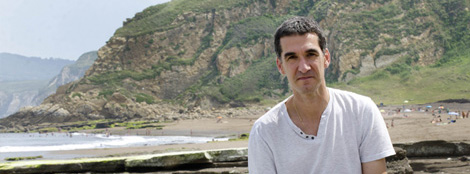
At the forthcoming Strati 2015 meeting in July, ICS will award two prizes, the Digby McLaren Medal and the ICS Medal, awarded to outstanding geoscientists every four years. The first awards were made at the 32nd IGC in Florence, 2004; the second and third at the 33rd and 34th IGC in Oslo, 2008 and in Brisbane, […]
Author Archives: admin

13
Jul
Jul
2nd International Congress on Stratigraphy 19 – 23 July 2015 Graz, Austria The congress follows the invitation by the International Commission on Stratigraphy (ICS) of the International Union of Geological Sciences (IUGS) to be held in Graz (Austria), July 19-23, 2015. The congress will be open to all topics in stratigraphy. The technical program will […]
12
Jul
Jul
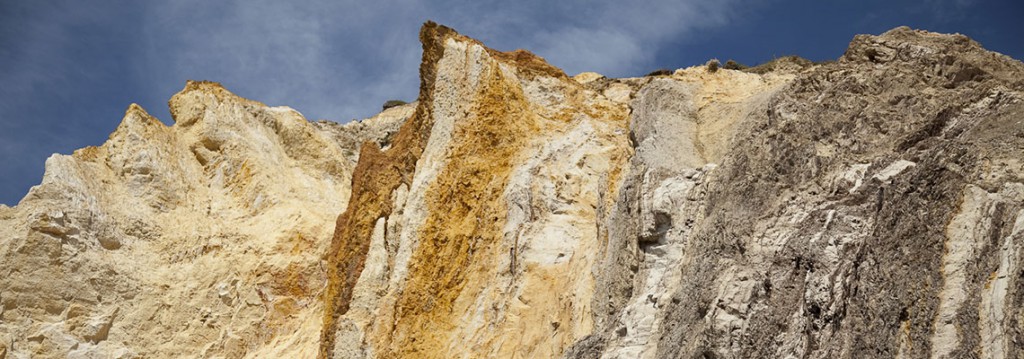
Bartonian Working Group Field Meeting There is a field trip scheduled to visit the sea-cliffs of Dorset, Hampshire and the Isle of Wight to study the Bartonian strata at Barton (unit stratotype), Alum Bay (parastratotype) and Hengistbury Head in October 2015. Eexact dates will be communicated after we complete risk assessments because of requirements of […]
07
Jul
Jul
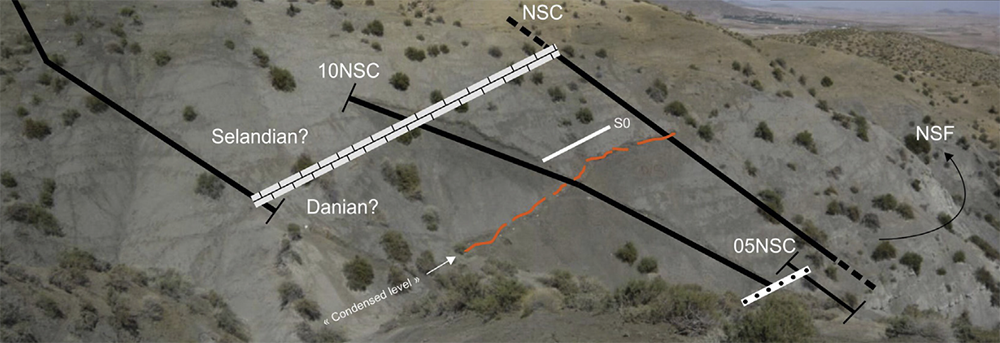
The Global Boundary Stratotype Section and Point for the base of the Selandian Stage is defined in the Zumaia section (Spain) at an abrupt change in lithology (base of Itzurun Formation), which coincides with the onset of a negative carbonate carbon isotope shift. However, this lithological change is not always very well expressed in other […]
GSSP for Ypresian Stage (Eocene) Definition: The base of the Eocene Series and Ypresian Stage is defined in the DBH Subsection of the Dababiya Section, near Luxor, Egypt, at the base of a lithostratigraphic unit where the initiation of the so-called Carbon Isotope Excursion (CIE) is recorded. Location: The Ypresian GSSP is located at the […]
GSSP for Thanetian Stage (Paleocene) Definition: The base of the Thanetian Stage is defined in the sea-cliff along the main beach of the coastal town Zumaia, Basque Country, northern Spain. The GSSP is about 78m above the Cretaceous/Paleogene boundary. The GSSP is defined at a level 2.8 m or eight precession cycles above the base […]
GSSP for Selandian Stage (Paleocene) Definition: The base of the Selandian Stage is defined in the sea-cliff along the main beach of the coastal town Zumaia, Basque Country, northern Spain. The GSSP is at the base of the Itzurun Formation about 49m above the Cretaceous/Paleogene boundary. The best event for global marine correlation is the […]
GSSP for Danian Stage (Paleocene) Definition: The base of the Cenozoic Era, Paleogene System, Paleocene Series and Danian Stage is defined at the reddish layer at the base of the 50 cm thick, dark boundary clay in a tributary of the Oued Djerfane, west of El Kef, Tunisia, where it coincides with the Iridium Anomaly […]
GSSP for Rupelian Stage (Oligocene) Description: The GSSP for the base of the Rupelian Stage (Eocene/Oligocene boundary) is defined in the Massignano section about 10 km southeast of Ancona, Italy. The GSSP is at the base of a 0.5 m thick greenish-grey marl bed. At this level, both the planktonic foraminifera Hantkenina and Cribrohantkenina, Eocene […]
29
Jun
Jun
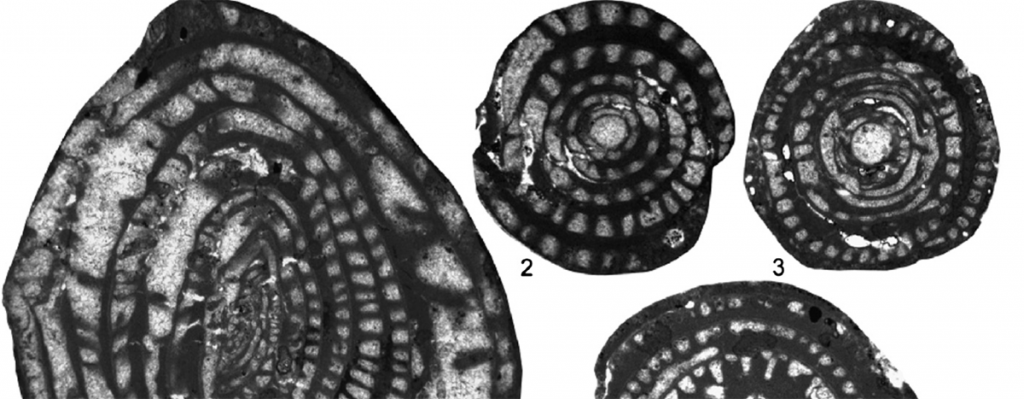
The current available Shallow Benthic Zones (SBZs) calibration based on larger foraminifera is now being improved for the Paleogene Period. In a recently published study (Rodríguez-Pintó et al. 2013) on the San Pelegrín section in the External Sierras, new magnetostratigraphic and biostratigraphic information from the Southwestern Pyrenean basin are shown, where the larger thickness of […]